








 USA
USA United Kingdom
 Germany
 Argentina
 Australia
 Canada
 New Zealand
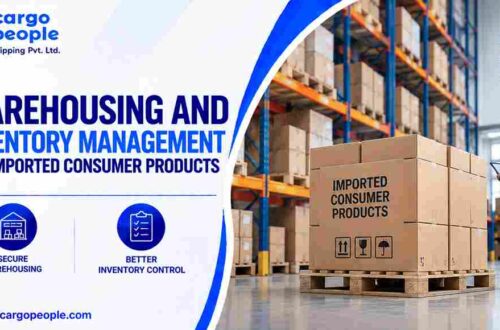
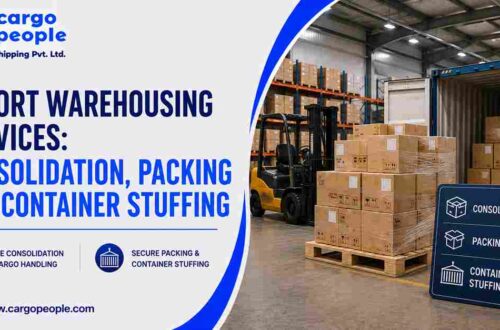
Warehousing Services in India include the complete management of goods after they arrive from a supplier, factory, port or airport. The process covers unloading, quantity verification, quality inspection, inventory entry, storage allocation, order picking, packing, dispatch and final distribution.
A professionally managed warehouse is not simply a building where products remain until they are needed. It functions as an operational link between purchasing, manufacturing, imports, sales and customer delivery. Every inward and outward movement should be recorded so that the physical inventory matches the quantity visible in the Warehouse Management System.
For importers, warehousing must be planned before the vessel or aircraft arrives. The business needs to confirm Customs clearance, delivery order availability, transport placement, dock capacity, unloading equipment and available storage space. A container that has received Customs clearance can still remain at the port if the warehouse cannot receive it.
For manufacturers, the warehouse may support raw-material storage, production-line feeding, finished-goods inventory and dealer distribution. For traders, it may provide flexible storage for seasonal or imported products. For exporters, it may support consolidation, labelling, packing and pre-dispatch staging.
The right warehouse should reduce the total cost and uncertainty of the supply chain. Low rent has limited value if inventory is inaccurate, vehicles remain waiting, orders are dispatched incorrectly or imported cargo cannot move from the port on time.
When Customs Clearance Is Complete but the Cargo Still Cannot Move
Consider an importer expecting 8 containers of industrial components at Nhava Sheva. The Bill of Entry is filed correctly, duty is paid and Customs issues the Out of Charge order without a major delay.
The importer assumes that the cargo can now move immediately. However, the selected warehouse has only one operational dock and can unload a maximum of 3 containers per day. The remaining 5 containers must stay at the terminal, CFS or transporter yard for another 2 days.
At an illustrative storage or demurrage exposure of ₹12,000 per container per day, the 5 delayed containers can create an additional cost of ₹1.20 lakh. This calculation does not include trailer waiting, container detention, labour rescheduling or missed customer deliveries.
The shipment did not face a Customs problem. It faced a warehouse capacity and coordination problem.
This type of situation is common when businesses treat warehousing as an arrangement to be completed after cargo clearance. The warehouse should instead be connected with the freight, Customs and transport plan from the beginning.
Before the vessel arrives, the importer should know:
- How many containers or vehicles can be received each day
- Whether unloading labour and equipment are available
- Where the cargo will be stored after receipt
- When the inventory will become available in the system
A 2-day warehouse delay may appear small, but when multiple containers are involved, the financial exposure can rise quickly.
Why Warehousing Is More Than Storage Space
Storage is only one part of warehouse operations. The greater value comes from controlling how goods enter, move through and leave the facility.
When cargo arrives, the warehouse verifies the quantity and condition. It creates a Goods Receipt Note, allocates a storage location and updates the stock in the system. When a customer order is received, the warehouse selects the correct product, checks the quantity, packs the shipment and coordinates delivery.
Each step must be connected. If the goods are received but not entered in the system, the sales team may not know that inventory is available. If products are stored in the wrong location, warehouse staff may be unable to find them. If damaged stock is not separated, it may be dispatched to a customer.
Inventory accuracy has a direct financial impact. If a warehouse holds goods worth ₹5 crore, a 1% stock variance represents ₹5 lakh of unexplained exposure. Even a 0.5% variance represents ₹2.5 lakh.
The cost may be higher than the value of the missing stock. An inaccurate inventory record can lead to:
- Customer-order cancellation
- Emergency replacement purchases
- Production-line stoppage
- Loss of trust with dealers or distributors
A well-managed warehouse should improve inventory visibility, dispatch accuracy, order-processing time and customer-delivery performance. The facility should help the business make goods available at the right location and at the right time.
Growth of Warehousing Services in India
India’s warehousing market has expanded as manufacturers, importers, retailers and third-party logistics providers build larger and more organised distribution networks.
Industrial and warehousing transactions across the top 8 Indian cities reached approximately 19.3 million sq. ft. during Q1 2026. This represented around 15% year-on-year growth. Manufacturing companies accounted for approximately 48% of the demand, while third-party logistics providers accounted for nearly 33%.
The total warehousing stock across the major markets reached approximately 568 million sq. ft. Grade A facilities represented around 46% of this stock.
This growth shows that businesses are moving beyond basic storage sheds. They increasingly require warehouses with stronger flooring, higher clear heights, fire systems, loading docks, security, ventilation, material-handling equipment and technology-based inventory control.
Mumbai represented approximately 32% of the warehousing stock across the leading markets, while Delhi NCR accounted for around 21%. These regions remain important because they combine large consumer markets with ports, airports, industrial clusters and national highway connectivity.
Warehousing demand is also growing in Ahmedabad, Pune, Chennai, Bengaluru, Hyderabad and Kolkata. Businesses are establishing regional facilities instead of serving the entire country from one central warehouse.
A regional warehouse can reduce delivery distance and improve response time. However, operating several warehouses also increases inventory complexity and working-capital requirements. The decision should therefore be based on customer demand, order frequency and transport cost.
Types of Warehouses Used by Indian Businesses
The right warehouse depends on the legal status of the goods, monthly volume, order profile and level of operational control required.
A domestic warehouse stores locally manufactured products or imported goods on which Customs duty has already been paid. It is commonly used for regular inventory, dealer distribution, factory supply and customer fulfilment.
A bonded warehouse stores imported goods under Customs control while payment of import duty is deferred. The importer can release smaller quantities through the ex-bond process when the goods are required for sale or production.
A Container Freight Station may support Customs examination, de-stuffing, segregation and temporary storage near the port. It is useful where cargo cannot move directly from the terminal to the final warehouse.
An FTWZ can support international inventory, re-export and certain permitted value-added operations. It may be considered by businesses holding stock for multiple countries or planning phased entry into the Indian market.
Warehouses can also be divided according to their commercial model.
| Warehouse Model | Best Suited For | Main Benefit | Main Limitation |
|---|---|---|---|
| Dedicated warehouse | Stable and high-volume operations | Greater control over layout and processes | Higher fixed monthly commitment |
| Multi-client warehouse | Variable or moderate inventory | Flexible space and shared infrastructure | Limited customisation |
| On-demand warehouse | Seasonal or short-term stock | Low long-term commitment | Higher transaction rates may apply |
| Bonded warehouse | Imported goods released gradually | Customs-duty deferment | Detailed Customs control required |
| FTWZ facility | Re-export and international distribution | Regional inventory flexibility | Greater compliance complexity |
| Regional distribution centre | Dealer and customer replenishment | Faster deliveries | Additional inventory holding |
A business importing 2 containers every month may not need a dedicated facility. A manufacturer dispatching 15 to 20 vehicles daily may require a customised warehouse with dedicated manpower, docks and systems.
How Warehousing Services in India Support Importers
Imported cargo moves through several stages before it becomes available for sale or production. Each stage requires separate planning.
The first stage is vessel or aircraft arrival. The importer and Customs broker prepare the Bill of Entry, supporting documents and duty payment. Customs may review classification, valuation, licences and regulatory requirements.
For an uncomplicated consignment, clearance may be completed within approximately 24 to 72 hours. However, the official average import-release time has been around 79 hours at seaports and around 39 hours at air cargo complexes.
Cargo requiring physical examination, technical clarification, licence verification or valuation review may take 4 to 7 days or longer. Therefore, businesses should not treat a 24-hour release as a guaranteed standard.
After Customs clearance, the carrier or shipping line completes delivery-order formalities. The container or cargo is then released by the terminal or CFS and transported to the warehouse.
The warehouse should receive the arrival schedule before the vehicle leaves the port. It should confirm:
- Vehicle and container number
- Package count and cargo dimensions
- Unloading method and equipment
- Expected reporting time
The warehouse must also have space available. If the cargo arrives but no storage location has been allocated, unloading may stop and the vehicle may remain waiting.
Imported cargo should become saleable only after quantity verification, quality inspection and system entry are completed. Customs release and inventory availability are therefore not the same event.
Direct Port Delivery and CFS-Based Cargo Movement
Direct Port Delivery allows eligible imported containers to move from the port terminal after Customs clearance without first entering a traditional CFS.
Average release time for Direct Port Delivery cargo has been around 65 hours, compared with approximately 84 hours for CFS-routed cargo. This indicates that direct movement may reduce part of the overall dwell time when the importer, transporter and warehouse are ready.
However, Direct Port Delivery requires strong coordination. The warehouse must be able to receive the container according to the terminal release schedule. The vehicle, dock and unloading resources should be available without delay.
CFS routing may be practical where the importer requires de-stuffing, Customs examination, temporary storage or cargo segregation. It may also provide flexibility where the final warehouse is not ready.
Physical movement from port to CFS may require only a few hours. A larger delay can occur after the cargo enters the CFS, particularly when the importer postpones clearance or delivery.
Businesses should compare DPD and CFS routing based on the complete logistics flow rather than one single time figure.
The decision should consider:
- Customs examination requirement
- Warehouse receiving capacity
- Transport availability
- Free-time and storage conditions
A DPD shipment can still become expensive if the vehicle reaches a warehouse that cannot unload it.
Step-by-Step Warehouse Operations Process
1. Pre-Receipt Planning and Space Allocation
Warehouse operations should begin before the vehicle reaches the gate. The customer should share the expected arrival date, vehicle details, purchase order, packing list, SKU master and handling instructions.
The warehouse should calculate the actual storage requirement. A shipment described as 1,000 cartons may occupy different space depending on carton dimensions, pallet configuration and stackability.
For example, 1,000 lightweight cartons that can be stacked 5 levels high may require much less area than 1,000 fragile cartons that can only be stacked 2 levels high.
The warehouse should also identify whether the goods need pallet racks, floor storage, shelves, secure cages or temperature-controlled areas. Heavy goods may require stronger flooring, while high-value products may require restricted access.
Advance planning allows the warehouse to reserve:
- Dock capacity
- Labour and supervisors
- Forklifts or pallet trucks
- Storage and staging space
If the shipment is imported, the warehouse should also receive the estimated Customs release date so that it can plan the receiving window.
2. Vehicle Arrival and Gate Verification
When the vehicle reaches the facility, the security team verifies the driver, vehicle number, seal, delivery documents and appointment details.
The reporting time should be recorded because it is used to measure vehicle turnaround. The vehicle is then assigned to a dock or unloading area.
An organised warehouse should use scheduled time slots. Without appointment planning, several vehicles may arrive together, creating queues and labour shortages.
A truck may wait for 3 to 5 hours even when unloading requires only 60 minutes. This waiting time increases transport cost and affects the driver’s next scheduled trip.
For containerised cargo, delay at the warehouse may also increase detention exposure if the empty container is not returned within free time.
Vehicle turnaround should therefore be monitored from gate-in to gate-out.
3. Unloading and Physical Quantity Verification
Warehouse staff unload the goods and compare the physical packages with the invoice, packing list, delivery challan or transfer order.
Each package should be counted. Damaged packaging, broken seals, water exposure, shortage or excess quantity should be recorded immediately.
Suppose the packing list shows 1,000 units but the warehouse receives only 985 units. The system should record 985 units as physically received, while the remaining 15 units should be reported as a shortage.
If the warehouse enters the invoiced quantity without verification, the WMS will show inventory that does not physically exist.
Photographs should be taken before unloading where the cargo is visibly damaged. This helps establish whether the damage occurred before receipt, during transport or inside the warehouse.
The driver or transporter representative should acknowledge major discrepancies before leaving the site.
4. Goods Receipt Note and Quality Inspection
The Goods Receipt Note confirms the quantity physically accepted by the warehouse.
The GRN should mention the SKU, product description, batch, serial number, quantity, supplier, vehicle and date of receipt. Any shortage, excess or damage should be linked to the same receipt record.
Certain goods require quality inspection before they become available. Industrial components may need dimensional checks, while food, chemicals or pharmaceuticals may require batch and expiry verification.
Stock awaiting inspection should remain in a quarantine area. It should not be mixed with approved inventory.
For example, if 100 units are received and 8 units fail the quality check, the WMS should show:
- 92 units as saleable
- 8 units as rejected or blocked
This prevents rejected goods from being selected during order picking.
5. Put-Away and Storage Allocation
Put-away means moving accepted stock from the receiving area to its assigned storage location.
A WMS may select the location based on size, weight, product type, movement frequency and compatibility. Fast-moving goods should generally remain close to picking and dispatch zones.
Heavy products should be stored on suitable floor locations or lower rack levels. Fragile goods should be protected from impact, while incompatible products should remain separated.
Incorrect put-away creates operational problems. The WMS may show that a product is stored in rack A-12, while the physical stock is placed in rack B-16. The inventory exists but cannot be found when the order is processed.
Every movement should therefore be scanned or confirmed in the system. Manual relocation without a system entry should be restricted.
A practical warehouse should maintain some free space for incoming cargo. Continuous utilisation above 90% can block aisles, increase temporary stacking and reduce operational efficiency.
6. Inventory Storage and Stock Rotation
Once goods are stored, the warehouse is responsible for preserving their quantity, condition and traceability.
Stock rotation should follow the correct rule. FIFO means the oldest received goods are dispatched first. FEFO means the goods with the earliest expiry date are dispatched first.
FIFO is suitable for many general products. FEFO is more appropriate for food, chemicals, cosmetics, pharmaceuticals and other products with expiry dates.
The warehouse should also separate:
- Saleable stock
- Damaged stock
- Returned inventory
- Expired or blocked goods
Mixing these categories can result in incorrect order fulfilment.
Inventory ageing reports should be reviewed regularly. Stock remaining unused for 90, 180 or 365 days may require commercial action, relocation or disposal planning.
7. Order Processing and Picking
The order-processing stage begins when the customer issues a sales order, transfer order or replenishment instruction.
The WMS creates a pick list showing the SKU, quantity and location. Warehouse staff collect the required products and confirm the transaction through scanning.
Picking accuracy is one of the most important warehouse measures. A single wrong dispatch can create reverse logistics, replacement freight, customer dissatisfaction and payment disputes.
For example, if a warehouse processes 5,000 order lines per month at 99% accuracy, 50 order lines may still contain errors. At 99.8% accuracy, the number falls to 10.
High accuracy therefore requires more than a good percentage on paper. It requires barcode controls, clear labels and secondary verification for sensitive orders.
High-value, export or production-critical orders may require a second person to confirm the quantity and model before packing.
8. Packing, Labelling and Value-Added Services
After picking, the goods are moved to the packing area.
The packaging should protect the product during transportation and handling. Fragile goods may require cushioning, while heavy components may require reinforced cartons, crates or pallets.
The warehouse may also provide labelling, relabelling, kitting, repacking and promotional bundling.
For example, a manufacturer may send 3 separate components to the warehouse and ask the operator to combine them into one service kit. The WMS should record the consumption of the individual components and creation of the finished kit.
Value-added activities should have clear work instructions and quality checks. An incorrect label can create Customs, customer or regulatory problems.
The customer should define acceptable packaging standards, label format and inspection requirements before operations begin.
9. Dispatch Documentation and Vehicle Loading
Before dispatch, the warehouse verifies the order, prepares the required documents and assigns a vehicle.
Documents may include the invoice, delivery challan, e-way bill, transport receipt and customer-specific paperwork.
The loading plan should consider product weight and delivery sequence. Heavy packages should remain at suitable floor positions, and fragile goods should not be placed below heavier cargo.
Where one vehicle serves several customers, the first delivery should remain easily accessible. Incorrect sequence loading increases unloading time and handling risk.
The warehouse should record the vehicle number, driver details, package count, dispatch time and seal number where applicable.
Proof of delivery should be collected after the consignee accepts the shipment. This record supports invoice confirmation and dispute resolution.
Warehouse Operations Process Table
| Stage | Main Responsibility | Indicative Timeline | Documents | Main Risk |
| Pre-receipt planning | Customer and warehouse | 1-3 days before arrival | Packing list and arrival plan | Space unavailable |
| Vehicle reporting | Security and transport team | 15-60 minutes | Vehicle and driver documents | Dock congestion |
| Unloading | Warehouse operations | 1-4 hours | Packing list and challan | Damage or shortage |
| GRN preparation | Inventory team | 2-8 hours | GRN and discrepancy report | Incorrect stock entry |
| Quality inspection | Customer or warehouse | Same day or next day | Inspection report | Rejected stock mixed |
| Put-away | Warehouse team | 2-12 hours | WMS location record | Wrong storage location |
| Order processing | Customer and WMS team | Same day | Sales or transfer order | Incorrect order data |
| Picking and packing | Warehouse operations | 2-24 hours | Pick list and packing record | Wrong SKU or quantity |
| Dispatch | Warehouse and transporter | Same day or scheduled | Invoice, e-way bill and challan | Vehicle delay |
| Distribution | Transporter | Route-dependent | Proof of delivery | Late or failed delivery |
These are practical planning ranges. Actual performance depends on shipment size, warehouse layout, cargo type and agreed service level.
Documentation Required for Warehouse Operations
Warehouse documents create a traceable record from inward receipt to customer delivery.
The commercial invoice and packing list provide the original product and quantity details. The GRN confirms what the warehouse physically received. The inspection report records damages or shortages.
Put-away confirmation records where the goods are stored. The pick list authorises the issue of inventory. Dispatch records show what left the warehouse and when.
For imported goods, the Bill of Entry and delivery order support cargo clearance and release. Bonded cargo requires additional Customs records.
| Document | Issued By | Purpose | Main Risk |
| Commercial invoice | Seller | Product, quantity and value details | Description mismatch |
| Packing list | Supplier | Package and quantity details | Incorrect receipt |
| Bill of Entry | Importer or Customs broker | Import clearance | Customs discrepancy |
| Delivery order | Carrier | Cargo release | Port delay |
| E-way bill | Registered business | GST movement compliance | Vehicle detention |
| Goods Receipt Note | Warehouse | Confirms physical receipt | Shortage not recorded |
| Inspection report | Warehouse or customer | Records damage and condition | Claim rejected |
| Put-away confirmation | WMS | Records storage location | Stock cannot be located |
| Pick list | WMS | Authorises order selection | Wrong SKU dispatched |
| Delivery challan | Seller or warehouse | Supports goods movement | Delivery dispute |
| Proof of delivery | Consignee or transporter | Confirms receipt | Payment dispute |
| Into-bond Bill of Entry | Importer or Customs broker | Places cargo under bond | Customs ledger mismatch |
| Ex-bond Bill of Entry | Importer or Customs broker | Releases bonded goods | Duty or quantity issue |
All parties should agree on document ownership, reporting frequency and retention periods before operations begin.
Inventory Management and Stock Accuracy
Inventory accuracy measures whether physical stock matches the balance recorded in the WMS or ERP.
Discrepancies commonly occur when goods are received without scanning, stock is relocated manually, damaged items are removed without adjustment or returns remain unprocessed.
A warehouse holding ₹10 crore of inventory has ₹10 lakh of exposure at a 1% variance. At 0.25%, the value is still ₹2.5 lakh.
The business may also lose sales because the system shows incorrect availability. If the WMS reports 2,000 units but only 1,950 are physically present, the business may accept an order it cannot fulfil.
A practical inventory-accuracy target for a controlled operation may range from 98.5% to 99.8%. High-value and serial-number-controlled goods should operate closer to the higher end.
Inventory controls should include:
- Barcode or QR scanning
- Cycle counting
- Authorised stock adjustments
- Separate damaged and return locations
Cycle counting checks selected stock during normal operations. Fast-moving or high-value items may be counted weekly or monthly, while lower-risk inventory can be checked less frequently.
Warehouse Management Systems and Real-Time Visibility
A Warehouse Management System records the movement of goods from receipt to dispatch.
The system creates GRNs, allocates locations, controls picking, tracks batches and records stock balances. It can also generate ageing, inventory and order-status reports.
A WMS should reflect the real operating process. A dashboard is useful only when every physical movement is recorded correctly.
For an importer or manufacturer, important features may include serial-number tracking, batch control, expiry management, barcode scanning and ERP integration.
The WMS should also maintain a user audit trail. If someone changes inventory from 500 units to 480 units, the system should record the user, date, time and reason.
Real-time visibility helps sales, finance, procurement and logistics work from one inventory balance. Separate spreadsheets maintained by different departments can create conflicting stock positions.
System controls should be supported by physical discipline. Technology cannot correct inaccurate receiving or unrecorded warehouse movements by itself.
Warehouse Performance Indicators Decision-Makers Should Track
Warehouse performance should be measured using operational indicators rather than only occupancy and rent.
Inventory accuracy measures the difference between physical and system stock. Picking accuracy measures whether the correct product and quantity were selected.
Dock-to-stock time measures how long it takes for received goods to become available in the system. Vehicle turnaround measures the time from gate-in to gate-out.
On-time-in-full delivery measures whether the customer received the complete order within the agreed timeline.
| Performance Indicator | Practical Target Range |
| Inventory accuracy | 98.5%-99.8% |
| Picking accuracy | 99.5% or higher |
| Standard dock-to-stock time | 4-12 hours |
| Inspected cargo dock-to-stock | 12-24 hours |
| Vehicle turnaround | 60-120 minutes |
| On-time-in-full delivery | 95%-98% |
| Space utilisation | 75%-85% |
| Damage or shrinkage | Below 0.1%-0.3% |
| Return processing | 24-48 hours |
These figures should be treated as practical SLA ranges, not universal guarantees.
The correct target depends on the cargo. A warehouse handling large industrial machines cannot be evaluated using the same order-speed target as a small-parts fulfilment centre.
Bonded Warehousing for Imported Inventory
A bonded warehouse allows imported goods to remain under Customs control while payment of import duty is deferred.
This model may help businesses importing larger quantities but selling or consuming the goods gradually. Instead of paying duty on the full shipment immediately, the importer can clear smaller quantities through ex-bond Bills of Entry.
For example, an importer may bring goods with an assessable value of ₹5 crore but require only 20% of the inventory during the first month. Bonded storage can support phased clearance, subject to the applicable Customs framework.
Bonded warehousing provides duty deferment, not automatic exemption. The importer must comply with Customs documentation, inventory records and prescribed controls.
Physical stock must match the electronic warehouse ledger. If the Customs system shows 1,000 units but the warehouse physically holds 980, the mismatch can affect ex-bond clearance.
For many goods, the general warehousing period may extend up to 1 year, subject to applicable conditions. Interest and extension provisions may apply depending on the duration and nature of the goods.
Businesses should evaluate bonded storage based on:
- Duty amount and cash-flow benefit
- Expected release schedule
- Customs compliance cost
- Warehouse and interest charges
The facility should be selected only after comparing the total financial impact.
When an FTWZ May Be Suitable
An FTWZ may support international inventory, re-export and permitted value-added operations.
A global company may use an FTWZ to hold products close to India and other regional markets without immediately clearing the full inventory for domestic sale.
Permitted activities may include sorting, labelling, kitting and repacking, subject to the applicable regulatory framework.
This model may be useful when goods are expected to be re-exported or released gradually into India. It may also support regional spare-parts distribution.
However, an FTWZ is not automatically cheaper than a domestic or bonded warehouse. The business should consider facility charges, Customs processes, transaction volumes and inventory duration.
The decision should be based on actual trade flow. A company selling almost all inventory in India may find a domestic or bonded model more practical.
How to Select the Right Warehouse Location
Warehouse location affects inbound transport, customer deliveries, vehicle turnaround and total distribution cost.
A port-linked warehouse may reduce the distance travelled by imported containers. A market-linked warehouse may improve delivery speed to dealers and customers. A factory-linked warehouse may support production-line supply.
The business should compare both inbound and outbound movement. Selecting a warehouse only because it is close to the port may increase customer-delivery cost.
Average base warehouse rent in major Indian markets has ranged from approximately ₹19.30 to ₹28.50 per sq. ft. per month.
For a 10,000 sq. ft. warehouse, this represents monthly base rent of approximately ₹1.93 lakh to ₹2.85 lakh. Maintenance, manpower, equipment, security, WMS and handling are additional.
A lower rent does not always mean a lower total cost.
Consider 2 warehouse options. Warehouse A costs ₹2.60 lakh per month and is close to customers. Warehouse B costs ₹2 lakh but is 40 kilometres farther away.
Warehouse B saves ₹60,000 in rent. If the additional distance increases each delivery by ₹2,000 and the business completes 15 trips per day for 26 days, the extra transport cost becomes ₹7.80 lakh per month.
After adjusting for the rental saving, the cheaper warehouse increases monthly supply-chain expenditure by ₹7.20 lakh.
Warehouse selection should therefore consider:
- Distance from port, airport or factory
- Distance from customers and dealers
- Highway access and vehicle restrictions
- Labour and infrastructure availability
The correct location is the one that produces the lowest total delivered cost while meeting the required service level.
Warehousing Cost Breakdown in India
Warehouse cost includes more than rent.
Occupancy cost includes property rent, maintenance, deposit, utilities and insurance. Operating cost includes manpower, supervision, security, housekeeping, forklifts and racking.
Transaction charges may apply to unloading, GRN creation, put-away, picking, packing and loading. Value-added services such as labelling, kitting and repacking are usually charged separately.
Distribution cost includes vehicle hire, tolls, route planning, waiting, failed deliveries and reverse logistics.
Illustrative Monthly Cost for a 10,000 Sq. Ft. Warehouse
| Cost Component | Illustrative Monthly Amount |
| Base rent | ₹2.40 lakh |
| Maintenance and utilities | ₹60,000 |
| Manpower and supervision | ₹3.20 lakh |
| Security and housekeeping | ₹80,000 |
| Material-handling equipment | ₹90,000 |
| WMS and scanning systems | ₹50,000 |
| Insurance and compliance | ₹30,000 |
| Packaging and consumables | ₹70,000 |
| Estimated monthly warehouse cost | ₹9.40 lakh |
This example excludes outbound transportation. Actual cost depends on the location, cargo, service level and transaction volume.
A quotation should clearly identify:
- Minimum space or pallet commitment
- Inward and outward handling rates
- Included manpower and equipment
- WMS, packaging and transport charges
A low storage rate can be offset by high per-transaction charges.
Distribution Services from Warehouse to Customer
Distribution converts warehouse inventory into customer availability.
Full-truckload transportation is suitable where one shipment uses most of the vehicle capacity. Part-truckload transportation is more suitable for smaller shipments moving to different customers.
The warehouse should plan dispatch according to delivery priority, route, vehicle capacity and customer time slots.
For manufacturers, the warehouse may support daily production-line feeding. For traders, it may supply regional dealers. For importers, it may divide one container into multiple customer orders.
A regional distribution centre can reduce customer lead time. Inventory positioned near Delhi NCR may reach customers within 1 day instead of 2 to 4 days from a distant central warehouse.
However, regional stocking increases inventory duplication. The business may need to hold the same SKU in several locations.
Distribution planning should therefore balance:
- Delivery speed
- Vehicle utilisation
- Inventory holding cost
- Customer demand pattern
A faster delivery model should not create excessive working-capital exposure.
Common Warehouse Risks and Operational Delays
Incorrect Goods Receipt
A warehouse may record the invoice quantity without physically checking the cargo.
If 1,000 units are invoiced but only 980 are received, the WMS will show 20 units that do not exist.
The shortage may only be discovered when a customer order is processed. By that time, the transporter or supplier may dispute responsibility.
Physical verification should be completed before the vehicle leaves.
Wrong SKU or Storage Location
Similar products may have almost identical packaging or codes.
If the wrong item is stored in a bin, the warehouse may pick and dispatch it to a customer.
Barcode scanning and clear labels reduce this risk. Manual location changes should be restricted.
Failure to Follow FIFO or FEFO
When stock rotation is not controlled, older inventory may remain unused while newer goods are dispatched.
For dated products, this can lead to expiry and write-offs.
The WMS should identify the correct batch during picking and block dispatch of expired goods.
Customs Release Without Warehouse Capacity
Imported containers may receive Customs release while the warehouse lacks dock or storage capacity.
At an illustrative ₹10,000 per container per day, a 3-day delay for 4 containers can create ₹1.20 lakh of exposure.
Warehouse capacity should be confirmed before cargo gate-out.
Vehicle Congestion and Waiting
Several vehicles arriving at the same time can create queues.
A vehicle waiting 4 hours may miss its next delivery and generate additional charges.
Dock appointments, driver communication and real-time planning can reduce congestion.
Delayed Return Processing
Returned inventory may remain in an unidentified area for several days.
Until inspection is completed, the business does not know whether the goods are saleable, repairable or rejected.
Returns should normally be inspected and updated in the system within 24 to 48 hours.
Case Study 1: Warehouse Capacity Creates Port Delay
An importer receives 10 containers of electrical components at an Indian port.
Customs clearance is completed, but the warehouse has space and labour to receive only 6 containers. The remaining 4 containers stay at the terminal for 3 additional days.
At an illustrative demurrage exposure of ₹10,000 per container per day, the delay creates ₹1.20 lakh in additional charges.
The transporter also charges ₹25,000 for rescheduling the remaining container movements.
The total avoidable exposure reaches approximately ₹1.45 lakh.
The delay could have been prevented by checking warehouse capacity before Customs release.
Case Study 2: Inventory Difference Causes a Customer Failure
A distributor’s WMS shows 2,000 industrial components in stock. During order picking, the warehouse finds only 1,960 units.
The 40-unit shortage represents a 2% inventory variance. At ₹15,000 per unit, the financial exposure is ₹6 lakh.
The company has already accepted a customer order based on the system balance. It must either delay the delivery or arrange an emergency replacement purchase.
The discrepancy occurred because damaged units were physically removed but were not adjusted in the WMS.
A controlled damage and stock-adjustment process would have prevented the false inventory position.
Case Study 3: Lower Rent Produces Higher Logistics Cost
A manufacturer compares 2 warehouses.
Warehouse A costs ₹2.60 lakh per month and is located close to the main customer cluster. Warehouse B costs ₹2 lakh but is 40 kilometres farther away.
Warehouse B saves ₹60,000 in monthly rent.
However, each delivery costs ₹2,000 more because of the additional distance. At 15 trips per day and 26 working days, the additional transport cost reaches ₹7.80 lakh.
The business saves ₹60,000 on rent but spends ₹7.80 lakh more on deliveries.
The lower-rent warehouse increases the total monthly cost by approximately ₹7.20 lakh.
Dedicated Versus Multi-Client Warehousing
A dedicated warehouse serves one customer. The layout, manpower, systems and equipment can be designed according to the customer’s products and order pattern.
This model is suitable for stable volumes, specialised handling and businesses requiring greater operational control.
The limitation is fixed cost. Rent, manpower and infrastructure commitments continue even when volumes decline.
A multi-client warehouse shares space, labour and equipment across several customers. This provides flexibility and reduces long-term commitment.
It may suit importers, traders and businesses with seasonal or variable inventory. However, customisation may be limited, and dock or labour capacity may be shared during peak periods.
A company processing 10,000 orders every month may benefit from a dedicated facility. A business storing imported inventory for only 3 months may find a multi-client warehouse more economical.
The decision should be based on volume stability, required service level and operational complexity.
How to Select the Best Warehousing Services in India
The Best Warehousing Services in India should not be selected only through the lowest rent quotation.
The provider should first understand the cargo type, monthly inward volume, number of SKUs, order pattern, inventory value and customer locations.
The proposal should explain how goods will be received, inspected, stored, picked and dispatched. It should also define system access, reporting frequency, service levels and exclusions.
Decision-makers should review inventory accuracy, fire systems, security, vehicle turnaround, WMS capability and distribution performance.
Before selecting a warehouse, the business should confirm:
- Can the facility handle the expected inward and outward volume?
- Does the WMS support batch, serial number and expiry tracking?
- Can the warehouse meet the required order cut-off time?
- Is the location suitable for inbound and outbound transportation?
A physical site visit should be completed before finalising a long-term warehouse arrangement.
Role of an Integrated Logistics Provider
An integrated logistics provider connects international freight, Customs clearance, warehousing and distribution within one operational plan.
For imported cargo, the provider can coordinate the vessel or aircraft arrival, Bill of Entry filing, delivery order, port release, vehicle placement and warehouse receiving.
This prevents one party from completing its work without confirming whether the next stage is ready.
For example, the Customs broker should know when the warehouse can receive the container. The transporter should know whether the terminal release has been completed. The warehouse should know the expected vehicle reporting time.
The provider can also help the importer compare domestic warehousing, CFS routing, bonded storage and FTWZ options.
Cargo People Logistics supports businesses through coordinated air freight, sea freight, Customs clearance, warehousing, door-to-door delivery and domestic distribution.
The objective is not only to move cargo from one point to another. It is to ensure that the inventory reaches the warehouse, becomes visible in the system and is distributed according to the business requirement.
Conclusion
Warehousing Services in India are an important part of modern import, manufacturing and distribution operations.
A warehouse should be evaluated through inventory accuracy, dock-to-stock time, picking accuracy, vehicle turnaround and on-time delivery. The rent per square foot is only one part of the total cost.
Low rent has limited value when stock records are inaccurate, imported containers remain at the port, vehicles wait at the dock or customer deliveries fail.
Businesses should select a warehouse based on cargo type, volume, location, systems, distribution requirements and total supply-chain cost.
A properly planned warehouse can reduce logistics uncertainty, improve stock visibility and support faster customer delivery. An unsuitable facility can increase transport expenses, working capital and inventory risk.
Cargo People Logistics supports importers, exporters, manufacturers and traders through integrated sea freight, air freight, Customs clearance, warehousing, distribution and door-to-door logistics solutions.
📞 +91 97174 65454
📧 wecare@cargopeople.com
👉 Get a Shipping Quote from Cargo People Logistics
Frequently Asked Questions
1. What are Warehousing Services in India?
Warehousing services include cargo receipt, storage, inventory management, picking, packing, dispatch and distribution to customers, dealers or factories.
2. How much does warehouse space cost in India?
Base rent in major Indian warehousing markets may range from approximately ₹19 to ₹29 per sq. ft. per month. Manpower, handling, systems and transportation are charged separately.
3. What is the difference between a domestic and bonded warehouse?
A domestic warehouse stores duty-paid goods. A bonded warehouse holds imported goods under Customs control while duty payment is deferred until ex-bond clearance.
4. How long does imported cargo take to reach a warehouse?
An uncomplicated shipment may complete Customs clearance within 24 to 72 hours. Port release, transportation and warehouse receipt can add another 1 to 2 days.
5. What is a Warehouse Management System?
A WMS records goods receipt, storage locations, inventory movements, order picking and dispatch transactions.