








 USA
USA United Kingdom
 Germany
 Argentina
 Australia
 Canada
 New Zealand
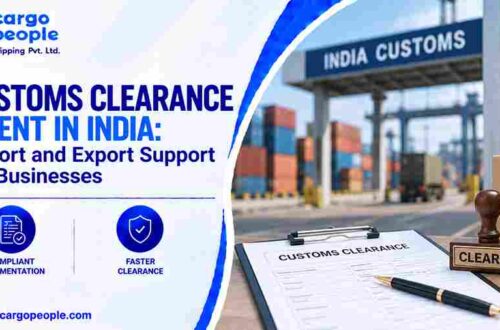
CHA Services in India help importers and exporters manage one of the most sensitive stages of international trade – customs clearance. A CHA, commonly known as a Custom House Agent, supports businesses with customs documentation, Bill of Entry or Shipping Bill filing, customs assessment coordination, cargo examination requirements, duty-related documentation and final cargo release.
For a business importing or exporting regularly, customs clearance is not simply a paperwork activity. A delay of even 1 to 2 days can affect inventory planning, production schedules, customer commitments and overall logistics cost.
This is why an experienced CHA should ideally become involved before the shipment reaches the Indian port or airport.
India’s 2025 customs time-release data showed average import release times of approximately 79 hours at seaports, 84 hours at ICDs and 39 hours at Air Cargo Complexes. These numbers make one thing clear – early documentation and clearance planning can make a significant operational difference.
Why CHA Services Matter Before Cargo Arrives in India
Many importers contact their customs clearance agent only after the vessel arrives or the air shipment lands.
That is often too late.
Suppose a manufacturer imports three containers of industrial components through Nhava Sheva. The vessel is due in four days, but the supplier invoice contains a generic description such as “machine parts” and the HS classification has not been fully reviewed.
If this issue is identified only after arrival, Customs may ask for technical literature, product specifications or clarification regarding classification.
During that period, the shipment remains within the terminal, CFS or shipping-line system.
The better approach is to complete as much customs preparation as possible while the cargo is still moving toward India.
A professional Custom House Agent in India should review commercial documents, check product descriptions, identify possible regulatory requirements and assess whether prior filing is possible.
This is especially important for businesses handling 10, 20 or 30 shipments per month.
When volumes increase, customs clearance should operate through a structured process rather than through last-minute coordination on every shipment.
Before cargo arrival, the importer and CHA should ideally review:
- Commercial invoice and packing list
- Bill of Lading or Air Waybill
- Product description and HS classification
- Import licence or product-specific approval
The goal is simple – solve avoidable issues before they start costing money.
Is a CHA and Customs Broker the Same in India?
CHA stands for Custom House Agent, a term that remains widely used in India’s import-export and freight industry.
However, the formal regulatory term currently used for the licensed professional is Customs Broker.
In normal business discussions, importers still use phrases such as CHA, customs clearance agent, customs broker and clearing agent interchangeably.
From a business perspective, the terminology matters less than capability.
An importer should focus on whether the provider understands the relevant commodity, customs location, documentation flow and regulatory requirements.
For example, customs clearance for imported electronics at Delhi Air Cargo may involve different operational issues from machinery arriving at Mundra or industrial raw material landing at Nhava Sheva.
The Customs Broker should therefore have practical experience with the type of cargo being handled.
What Does a Custom House Agent Actually Do?
A Custom House Agent acts as the customs coordination point between the importer or exporter and the different parties involved in international shipping.
A typical import shipment may involve 6 to 10 parties, including the overseas supplier, freight forwarder, shipping line or airline, Customs, terminal, CFS, transporter and consignee.
The CHA handles the customs-facing part of this process.
For imports, the broker normally checks shipment documents before preparing the Bill of Entry.
The commercial invoice, packing list, Bill of Lading or Air Waybill and product-related certificates must be consistent.
The CHA may also review classification, value declaration and applicable regulatory requirements.
Once the Bill of Entry is filed, Customs may process the shipment through a facilitated route or may raise a query, assess the declaration further or require examination.
If Customs asks for clarification, the CHA coordinates the response with the importer.
After duties and regulatory requirements are completed, Customs may issue Out of Charge.
For exports, the broker manages Shipping Bill filing, customs processing, examination where applicable and coordination until Let Export Order is received.
So the role of the CHA is much broader than just filing documents.
A strong CHA can influence the efficiency of:
- Duty assessment
- Regulatory compliance
- Clearance coordination
- Cargo release
CHA Services for Importers – Step-by-Step Customs Clearance Process
Import customs clearance usually begins as soon as the final shipping documents become available.
The first stage is document verification.
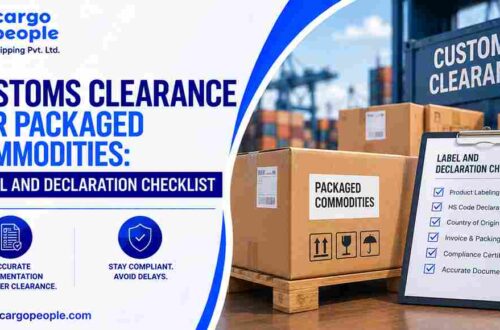
The CHA compares the commercial invoice, packing list and Bill of Lading or Air Waybill and checks whether product description, quantity, number of packages, gross weight, consignee name and commercial value are consistent.
The next stage is classification and regulatory review.
The product must be declared under the appropriate HS code and any relevant import conditions should be identified.
Certain categories such as electronics, food products, pharmaceuticals, medical devices, chemicals and wireless products may involve additional regulatory requirements.
Supporting documents are then prepared and uploaded, and the Bill of Entry is filed.
Customs processes the declaration and may either facilitate the shipment or select it for further assessment, clarification or examination.
Once duty is paid and all customs requirements are completed, Out of Charge is issued.
After that, terminal or CFS release can proceed and the shipment can move toward final delivery.
| Stage | Main Party | Activity | Main Risk |
|---|---|---|---|
| Document review | Importer + CHA | Verify commercial documents | Incorrect information |
| Classification | Importer + CHA | Review HS code | Wrong duty or compliance |
| Supporting documents | CHA | Upload licences and certificates | Missing approval |
| Bill of Entry | CHA | File import declaration | Filing error |
| Customs processing | Customs | Assessment or query | Clearance delay |
| Duty payment | Importer | Pay applicable duty | Payment delay |
| Examination | Customs | Physical verification if selected | Cargo mismatch |
| Out of Charge | Customs | Customs release | Pending compliance |
| Terminal release | Terminal/CFS | Cargo handover | Storage exposure |
| Delivery | Transporter | Final delivery | Inland delay |
Prior Bill of Entry Can Reduce Avoidable Delay
One of the most useful tools available to regular importers is the prior Bill of Entry.
A Bill of Entry can be filed before the arrival of the vessel or aircraft, subject to applicable customs rules.
This allows customs processing to begin while the cargo is still in transit.
Consider a manufacturer importing raw material from China with a sea transit of approximately 15 to 20 days.
If the final documents become available after vessel departure, the importer does not need to wait for the full transit period before preparing for customs.
The CHA can use this time to review the documents, confirm the product description and identify any missing approvals.
If a classification question or documentation gap is found 10 days before arrival, there is time to correct it.
If the same issue is discovered after the container reaches the port, the cost and operational impact can be much higher.
This is why prior filing and pre-arrival documentation should be part of a regular import SOP.
Documents Required for Import Customs Clearance
The exact document list depends on the product and transaction, but several documents are commonly required for most commercial imports.
The commercial invoice shows the product description, quantity, value, currency and commercial terms.
The packing list provides details such as package count, net weight, gross weight and packing configuration.
The Bill of Lading or Air Waybill connects the commercial shipment with the international transport movement.
The Bill of Entry becomes the formal import declaration submitted to Customs.
Additional certificates may be required depending on product category and regulatory conditions.
| Document | Purpose | Common Risk |
|---|---|---|
| Commercial Invoice | Shows value and transaction details | Valuation mismatch |
| Packing List | Shows quantity and package details | Quantity mismatch |
| Bill of Lading / AWB | Transport document | Consignee mismatch |
| Bill of Entry | Customs declaration | Classification error |
| IEC | Importer identification | Registration issue |
| Certificate of Origin | Establishes country of origin | FTA claim issue |
| Product Licence | Regulatory compliance | Customs hold |
| Insurance Document | Shipment and risk details | Incomplete records |
For regulated goods, the document list may be much larger.
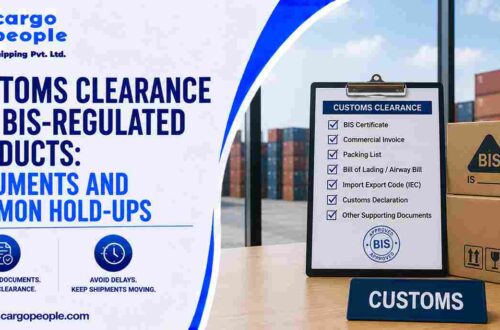
An electronics importer may need BIS-related compliance.
A food importer may require FSSAI clearance.
Wireless products may involve WPC-related requirements.
Medical devices may involve CDSCO-related requirements.
The CHA should therefore understand the nature of the cargo before filing the declaration.
How Long Does Customs Clearance Take in India?
There is no single customs clearance timeline for every shipment in India.
The actual time depends on the gateway, cargo type, documentation quality, product regulations and customs processing route.
In 2025, average import release times were approximately:
- 79 hours 04 minutes at seaports
- 83 hours 41 minutes at ICDs
- 39 hours 20 minutes at Air Cargo Complexes
- 13 hours 30 minutes at Integrated Check Posts
These are average release times, not guaranteed timelines.
A straightforward shipment with complete documentation may sometimes complete customs processing within 24 to 72 hours.
However, a shipment involving valuation review, product compliance, customs query or physical examination may take longer.
A regular importer should therefore focus less on asking whether customs can be completed in 24 or 48 hours and more on how much work can be completed before cargo arrival.
That is where effective CHA planning makes the biggest difference.
Customs Facilitation, Queries and Cargo Examination
India’s customs system increasingly uses risk-based processing.
In 2025, customs facilitation levels across major gateway categories were approximately 87% to 93%.
However, this does not mean that every remaining shipment is physically examined.
A shipment outside the facilitated route may undergo documentary review, assessment, customs query, Participating Government Agency intervention or physical examination.
Queries may relate to classification, valuation, country of origin, exemption claims or missing certificates.
The time taken to respond is critical.
If Customs asks for technical details at 10:00 AM and the importer provides complete documentation within two hours, the disruption may remain limited.
If the same information takes two days to obtain from an overseas supplier, the clearance period can increase significantly.
Regular importers should therefore maintain technical literature, product catalogues and compliance documents for frequently imported products.
This reduces dependency on last-minute information from suppliers.
HS Code and Customs Valuation Require Careful Review
The HS code is one of the most important parts of an import declaration.
It can affect Basic Customs Duty, IGST, anti-dumping duty, exemption eligibility, import restrictions and product-specific compliance.
A wrong HS code can therefore create both financial and regulatory problems.
Suppose an industrial component is declared under a heading that Customs considers incorrect.
Customs may ask for product literature, composition details or technical specifications.
If classification changes, the duty calculation may also change.
Valuation can create similar issues.
For example, if an imported shipment is declared at USD 25,000 and Customs has reason to question the value, the importer may need to provide purchase orders, payment records or transaction details.
This can delay final assessment.
The CHA can coordinate the response, but the importer must provide correct and complete commercial information.
The best clearance results come when classification and valuation are treated as compliance issues, not simply as opportunities to reduce duty.
Demurrage, Detention and Storage Can Increase Logistics Cost
One of the biggest mistakes importers make is focusing only on the CHA fee.
The real cost of a customs delay can be much higher.
There is no single standard demurrage rate across India.
Charges vary by port, shipping line, terminal, container size, cargo type, free-time arrangement and number of delayed days.
Consider a simple example.
An importer has 3 x 40-foot containers.
A documentation issue delays cargo release by four days.
If the commercial exposure under that specific arrangement works out to approximately ₹8,000 per container per day, the cost could be:
3 containers x ₹8,000 x 4 days = ₹96,000
This is only an illustrative example, not a standard industry tariff.
But it clearly shows how a small customs documentation issue can create a large logistics cost.
And that ₹96,000 does not include transporter rescheduling, inventory shortage or factory disruption.
Demurrage, Detention and Storage Are Not the Same
These terms are often used together, but they represent different cost categories.
Demurrage generally relates to containers remaining inside the terminal or port environment beyond the available free period.
Detention commonly relates to containers being kept outside the terminal beyond the permitted free time.
CFS or terminal storage can be charged separately.
Depending on the commercial arrangement, more than one cost may apply.
The important point for importers is that a customs problem can trigger costs outside Customs itself.
That is why clearance should be coordinated with container movement, terminal release and transport planning.
CHA Services for Exporters
Exporters also require CHA support for documentation accuracy and timely customs processing.
The export process normally starts with Shipping Bill preparation.
The cargo is then registered with Customs and processed through the relevant assessment or risk-management route.
If examination is required, the Customs Broker coordinates the process.
Once customs requirements are completed, a Let Export Order is issued.
However, LEO does not mean that the cargo has already left India.
In 2025, average regulatory export clearance at seaports was approximately 29 hours 36 minutes, while average post-LEO logistics time was around 157 hours 50 minutes.
This shows that export clearance and physical cargo departure are two different stages.
A shipment may be customs cleared but still be waiting for terminal handling, vessel connection or loading.
Exporters should therefore coordinate customs filing with booking schedules, cut-off times and terminal operations.
Air Freight and Sea Freight Customs Clearance Are Different
The basic customs principles are similar for air and sea cargo, but the operating environment is very different.
Air freight is normally used for urgent cargo, electronics, pharmaceuticals, samples, critical components and higher-value shipments.
Sea freight is commonly used for larger volumes, machinery, raw materials and regular containerized cargo.
In 2025, average import release time at Air Cargo Complexes was approximately 39 hours 20 minutes, compared with around 79 hours 04 minutes at seaports.
That does not mean every air shipment clears quickly.
A missing licence or classification issue can still delay an urgent air shipment.
In fact, because air freight is often selected for urgent cargo, even a 12 to 24 hour delay may be commercially significant.
Sea freight introduces additional container-related activities such as terminal handling, CFS movement, shipping-line release and empty-container return.
Businesses should therefore select air or sea freight based on urgency, cargo size, product value and total landed cost.
Major Customs Gateways – JNPA and Mundra
India’s major ports handle extremely large cargo volumes.
JNPA handled approximately 8.17 million TEUs during FY 2025-26, representing growth of around 11.94%.
Total cargo throughput at JNPA during the same period was approximately 102 million tonnes.
Mundra handled approximately 8.5 million TEUs during FY 2025-26.
These numbers show the scale of India’s containerized trade.
For a large port, one delayed container may be insignificant.
For the importer, that same container may hold raw materials needed for tomorrow’s production.
A company may have goods worth several lakhs or crores inside just two or three containers.
That is why documentation quality and pre-arrival customs planning matter even at highly efficient ports.
Common Reasons Customs Clearance Gets Delayed
Customs delays usually come from a combination of smaller operational issues.
A vague description may trigger a classification question.
A mismatch between the invoice and packing list may require clarification.
A missing licence can stop clearance until the compliance requirement is addressed.
Valuation issues can create additional assessment.
Common reasons include:
- Incorrect HS classification
- Missing regulatory approval
- Invoice and packing-list mismatch
- Delayed response to Customs query
For businesses importing the same products repeatedly, these issues should not be solved from scratch on every shipment.
Product literature, HS classification notes, licences and previous shipment records should be maintained internally.
This creates a more predictable customs process.
Why Customs Clearance Should Be Connected With Freight Forwarding
International logistics involves much more than customs clearance.
A shipment may start with supplier pickup in China, Europe, the USA or the Middle East and pass through several stages before reaching the buyer in India.
These stages can include origin transportation, export handling, air or sea booking, international freight, destination handling, customs clearance and inland delivery.
If every stage is handled by a different provider, the importer may need to coordinate with 4 to 6 separate companies.
This creates communication gaps.
An integrated freight forwarder and customs clearance partner can reduce these handover issues.
For example, if a vessel leaves Shanghai and transit to India is approximately 15 to 20 days, the customs team can review the commercial documents during the transit period.
By the time the vessel reaches Nhava Sheva or Mundra, many customs-related checks may already be completed.
This makes the overall logistics process more predictable.
How to Choose a CHA in India
The cheapest CHA is not always the most cost-effective option.
A business handling one shipment every six months may be able to manage customs clearance on a case-by-case basis.
A manufacturer handling 20 or 30 imports per month needs a structured customs process.
The CHA should understand the company’s product category, gateway, documentation cycle and internal approval process.
Importers should ask how early the CHA reviews documentation and how customs queries are handled.
They should also understand whether the provider can coordinate freight, customs and delivery when needed.
A reliable customs partner should identify risks before filing instead of only reporting problems after Customs raises them.
Conclusion
CHA Services in India play a critical role in helping importers and exporters move cargo through customs with better control over time, documentation and cost.
The real value of a Custom House Agent is not simply filing a Bill of Entry or Shipping Bill.
It lies in reviewing documents before arrival, supporting correct HS classification, identifying product-specific requirements, coordinating Customs queries and helping the shipment move efficiently toward release.
India’s 2025 customs data shows average import release times of around 39 hours at Air Cargo Complexes, 79 hours at seaports and 84 hours at ICDs.
For businesses, even an additional 1 or 2 days can affect inventory, production schedules and logistics costs.
This is why importers and exporters should treat customs clearance as part of the complete freight-planning process rather than as a separate activity that begins after cargo arrival.
A well-coordinated logistics partner can connect Air Freight, Sea Freight, Customs Clearance, Door-to-Door Delivery, Warehousing and Project Cargo under one operating plan.
For companies managing regular international shipments, this integrated approach can reduce coordination gaps and make shipment planning more predictable.
Cargo People Logistics supports importers, exporters, manufacturers and businesses with end-to-end freight and customs solutions across major Indian and international trade routes.
📞 +91 97174 65454
📧 wecare@cargopeople.com
👉 Get a Shipping Quote from Cargo People Logistics
Frequently Asked Questions
1. What are CHA Services in India?
CHA services include customs documentation, Bill of Entry or Shipping Bill filing, Customs coordination, examination support and cargo-release assistance for imports and exports.
2. What is the full form of CHA?
CHA stands for Custom House Agent. The formal regulatory term currently used is Customs Broker.
3. How long does customs clearance take in India?
The timeline varies by gateway and shipment type. In 2025, average import release time was around 79 hours at seaports, 84 hours at ICDs and 39 hours at Air Cargo Complexes.
4. Can a Bill of Entry be filed before cargo arrives?
Yes. A prior Bill of Entry can be filed before arrival subject to applicable Customs rules, allowing clearance processing to begin while the shipment is still in transit.
5. What documents are required for import customs clearance?
Common documents include the commercial invoice, packing list, Bill of Lading or Air Waybill, IEC, Bill of Entry and product-specific licences or certificates where applicable.