








 USA
USA United Kingdom
 Germany
 Argentina
 Australia
 Canada
 New Zealand
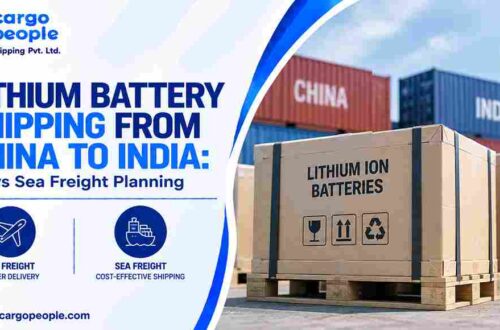
Lithium battery shipping in India is very different from moving normal commercial cargo. An importer cannot simply share the shipment weight, dimensions and pickup location and expect the freight booking to work like general cargo. Lithium batteries are treated as sensitive cargo because of fire and thermal runaway risks, which means airlines, shipping lines, freight forwarders and cargo terminals need much more information before accepting the shipment.
For an importer, the real work starts before the cargo reaches the airport or seaport. The battery type, UN classification, Watt-hour rating, State of Charge, UN 38.3 test summary, packaging method, shipment configuration and Indian import requirements should all be checked before space is confirmed.
This is why choosing a lithium battery freight forwarder in India should not be based only on the cheapest freight rate. A slightly lower freight quote can quickly become expensive if the cargo is rejected at origin, documentation has to be corrected, the battery does not meet carrier requirements or customs clearance is delayed after arrival in India.
For example, if a shipment faces an additional ₹10,000 per day in combined storage, handling and operational costs, even a 4-day delay can create an extra ₹40,000 in logistics exposure. For a manufacturer waiting for batteries to continue production, the indirect cost can be much higher.
The objective should therefore be simple: validate the shipment first, book freight second.
Why Lithium Battery Freight Forwarding Is Different From General Cargo
Lithium batteries are now used across electric vehicles, electronics, telecom equipment, solar energy storage systems, power tools, medical devices, industrial machines and consumer products. As battery imports into India grow, logistics teams are dealing with a much wider range of battery capacities and shipment configurations than they were a few years ago.
A small lithium battery installed inside electronic equipment does not have the same shipping requirements as a pallet containing standalone lithium-ion batteries. Similarly, a 50 Wh battery cannot automatically be handled in exactly the same way as a 4,000 Wh industrial battery pack.
The transport regulations depend on factors such as battery chemistry, Watt-hour rating, lithium content, shipment configuration and the mode of transport. This is why a lithium battery freight forwarder needs technical shipment details before selecting the carrier.
The risk for the importer is that a normal freight forwarder may initially quote the shipment as general cargo. Once the airline, shipping line or origin terminal identifies the batteries, the shipment may need to be rebooked, repacked or reclassified. This can lead to several days of delay before the cargo even leaves the supplier.
For regular importers, the better approach is to create a standard lithium battery shipping checklist and use it for every supplier and shipment. This keeps the freight forwarder, procurement team and overseas supplier aligned from the beginning.
Check the Lithium Battery Classification Before Asking for a Final Freight Rate
The first technical step is understanding how the battery is classified for transportation.
For lithium-ion batteries, the most common classifications are UN3480 and UN3481. Lithium-metal batteries normally fall under UN3090 and UN3091. These numbers help carriers understand what type of battery is being transported and whether it is shipped alone, packed with equipment or contained inside equipment.
| Battery Configuration | UN Number | Typical Air Packing Instruction |
|---|---|---|
| Lithium-ion batteries shipped alone | UN3480 | PI 965 |
| Lithium-ion batteries packed with equipment | UN3481 | PI 966 |
| Lithium-ion batteries contained in equipment | UN3481 | PI 967 |
| Lithium-metal batteries shipped alone | UN3090 | PI 968 |
| Lithium-metal batteries packed with equipment | UN3091 | PI 969 |
| Lithium-metal batteries contained in equipment | UN3091 | PI 970 |
This classification should not be decided only from the commercial invoice description.
For example, an invoice may simply mention “rechargeable lithium batteries”. That description does not tell the freight forwarder whether the batteries are standalone, packed with machinery or already installed inside the final equipment.
The freight forwarder will normally need details such as voltage, ampere-hour capacity, Watt-hour rating, battery chemistry, number of cells or batteries, gross weight, net battery weight and shipment configuration.
The Watt-hour rating itself can be important. A battery rated at 48 volts and 100 Ah has approximately 4,800 Wh of energy capacity.
The calculation is straightforward:
48 V x 100 Ah = 4,800 Wh
That battery needs to be evaluated very differently from a small 50 Wh battery used in portable electronics.
An importer should therefore avoid accepting a “final” freight quote until the battery classification and basic technical information have been reviewed.
UN 38.3 Documentation Should Be Checked Before the Cargo Is Ready
One of the most common problems in lithium battery logistics is incomplete documentation from the overseas supplier.
Many suppliers provide an MSDS or SDS and tell the importer that the battery is ready for international shipping. However, lithium battery transportation normally involves additional technical documentation, particularly the UN 38.3 test summary.
UN 38.3 relates to tests designed to assess whether batteries can withstand conditions that may occur during transportation. These include areas such as altitude simulation, thermal testing, vibration, shock and other transport-related safety conditions.
For the importer, the important point is not to wait until cargo pickup to ask for this document.
Imagine an importer has already paid the supplier, booked production, arranged pickup and scheduled an urgent air shipment. If the airline asks for the battery test summary and the supplier takes another 3 to 5 working days to provide acceptable documentation, the whole logistics plan can move backwards.
A stronger process is to collect the documents while the order is still being manufactured.
The basic pre-booking document set may include:
- UN 38.3 test summary
- Battery specification sheet
- SDS or MSDS
- Commercial invoice
- Packing list
- Applicable DG documentation
For Indian imports, applicable BIS, EPR or other regulatory documents should also be reviewed separately where required.
State of Charge Can Affect Lithium Battery Air Freight Acceptance
State of Charge, commonly called SoC, is another important area that importers should understand when planning air freight.
For certain lithium-ion battery shipments, particularly standalone batteries, a maximum State of Charge requirement can apply. A commonly relevant limit for applicable air shipments is 30% SoC.
This means an importer should not assume that batteries can simply be manufactured, fully charged and handed over to the airline.
The supplier needs to understand the intended mode of transport while preparing the cargo.
Consider a manufacturer ordering 500 lithium battery packs from China for an Indian production facility. If the supplier prepares every battery close to full charge and only learns about the applicable air transport limitation after cargo pickup has been scheduled, the shipment may need additional preparation before acceptance.
That could affect the original flight plan.
A practical lithium battery freight forwarder should therefore confirm at least 4 points before air booking:
- Battery configuration
- Watt-hour rating
- Applicable State of Charge requirement
- Carrier acceptance
The exact requirement depends on the shipment classification, so the battery should be checked according to the applicable packing instruction rather than using one general rule for every battery shipment.
Ask Whether the Freight Forwarder Has Actual Carrier Acceptance
One of the most important differences in lithium battery logistics is the difference between receiving a freight rate and receiving carrier acceptance.
These are not always the same thing.
A freight forwarder may be able to provide an indicative air freight rate within a few minutes based on origin, destination, chargeable weight and dimensions. However, an airline may still need to review the dangerous-goods details before accepting the shipment.
The same situation can occur with sea freight.
A shipping line may provide a sailing schedule, but the dangerous-goods department may still need to approve the battery information before the container booking becomes operationally usable.
This is why importers should ask a very simple question:
“Has the carrier accepted this exact lithium battery shipment, or is the quote still subject to DG approval?”
That question can prevent significant confusion.
Suppose an importer has 1,200 kg of lithium batteries ready in Shenzhen. The supplier expects pickup on Monday, but the airline approval has not yet been received. If approval takes another 2 or 3 working days, the importer may miss the planned departure and need to move to another flight.
For production-critical shipments, even a 48-hour booking delay can affect inventory planning.
Lithium Battery Air Freight – When Does It Make Commercial Sense?
Air freight is usually considered when speed is more important than transportation cost.
Lithium battery air freight can be suitable for urgent replenishment, replacement batteries, electronics production, EV components, medical equipment, industrial machines and other situations where the importer cannot wait several weeks for sea freight.
However, businesses should compare the freight cost with the financial impact of running out of inventory.
Consider an importer who requires 300 kg of batteries to avoid a production stoppage. If a production line generates ₹5 lakh of output per day, paying an additional ₹1 lakh for an urgent air shipment may be commercially reasonable if it prevents multiple days of disruption.
The reverse can also be true.
If the importer regularly purchases 8 to 10 MT of batteries every month and maintains sufficient inventory, repeatedly moving the entire quantity by air may significantly increase landed cost. Sea freight combined with better inventory forecasting could be more economical.
Air freight should therefore be selected because it solves a business requirement, not simply because it is faster.
The real door-to-door timeline should also include more than flight time.
A typical international air shipment may involve:
supplier preparation + DG approval + pickup + terminal acceptance + airline departure + Indian customs clearance + final delivery.
Even when the actual flight takes less than 10 hours, the complete logistics cycle can take several days.
Lithium Battery Sea Freight – Better for Planned Commercial Volume
Sea freight can be suitable when the importer is moving larger quantities and has enough inventory planning to accommodate longer transit times.
Battery shipments by sea still require proper dangerous-goods planning. The shipping line may need the UN number, technical description, package details and relevant documentation before providing final approval.
For larger imports, FCL can offer better operational control because the cargo is moved in a dedicated container. LCL can still be used in suitable situations, but dangerous-goods consolidation depends on the origin CFS, carrier policy, compatibility and destination handling arrangements.
This means an importer should not automatically choose LCL simply because the shipment is smaller than one full container.
For example, imagine an importer moving 8 pallets of batteries with a total gross weight of 7 MT. The LCL ocean freight may initially look cheaper, but after adding DG handling, CFS charges, origin handling and destination charges, the cost difference against an FCL option may reduce significantly.
The correct comparison should therefore include the total origin-to-destination cost, not only ocean freight.
Air Freight vs Sea Freight – Choose Based on Total Supply Chain Cost
The decision between air and sea freight should be made using urgency, shipment weight, inventory value, carrier acceptance, supplier readiness and final landed cost.
| Decision Factor | Air Freight | Sea Freight |
|---|---|---|
| Typical shipment requirement | Urgent cargo | Planned cargo |
| Transit speed | Faster | Longer |
| Cost | Generally higher | Generally lower |
| Large-volume suitability | Limited by economics | Stronger for bulk cargo |
| Inventory requirement | Lower pipeline inventory | Higher planning requirement |
| Carrier approval | Airline-specific | Shipping-line-specific |
| Main commercial advantage | Speed | Cost efficiency |
An importer should also consider inventory carrying cost.
Suppose a business imports ₹50 lakh worth of batteries every month. If sea freight adds 20 additional days compared with air, the business may need to hold more inventory. That has a working-capital impact.
At the same time, paying air freight on several tonnes every month could cost much more than financing additional stock.
There is no universal answer.
For many regular importers, a mixed strategy works better. Planned monthly volumes can move by sea while a smaller percentage of urgent replenishment is moved by air.
Indian Import Compliance Should Be Checked Before Shipment
Transport compliance is only one part of lithium battery import logistics.
An airline may accept the cargo perfectly, but the shipment can still face problems after reaching India if the product has not been checked for applicable import requirements.
Depending on the product, importer and intended use, the compliance review may involve IEC details, HS code classification, BIS applicability, Battery Waste Management requirements, EPR responsibilities or other product-specific rules.
Importers should be particularly careful about product classification.
For example, batteries imported separately may have a different regulatory position from batteries already incorporated into electronic equipment. Similarly, an EV battery pack, energy storage battery and small consumer electronics battery should not automatically be treated as one identical product category.
A compliance review before shipment can save several days of investigation after arrival.
For regular battery import programmes, the importer should ideally maintain a product-level compliance file containing technical specifications, classification history, supplier documents and previous customs clearance information.
Lithium Battery Customs Clearance in India Requires Pre-Arrival Planning
Customs clearance should not begin after the shipment lands.
For smooth import customs clearance, the forwarder and customs clearance team should receive the commercial documents before arrival so that the product description, HS code, assessable value and applicable compliance requirements can be checked.
For a straightforward shipment with complete documentation, import clearance may sometimes be completed within approximately 24 to 72 hours after the cargo and required documents are available.
However, this should be treated as a planning range and not as a guaranteed customs timeline.
Certain shipments may take longer because of document queries, examination, classification disputes, regulatory checks or incomplete importer documentation.
If a shipment gets delayed for 5 days and the importer faces an illustrative ₹8,000 per day in combined storage and related costs, that represents another ₹40,000 of logistics exposure.
At ₹12,000 per day, the same 5-day delay becomes ₹60,000.
The bigger issue may still be inventory.
If a factory is waiting for those batteries, the operational impact can be several times higher than the storage charge.
Documentation Should Be Reviewed Before Cargo Pickup
Many import delays are caused by small inconsistencies between documents rather than major regulatory problems.
The commercial invoice may describe the goods one way, the packing list may use a different product model and the battery specification may show information that does not match either document.
These differences can create unnecessary questions.
The freight forwarder should therefore compare the commercial and technical documentation before pickup.
| Document | Main Purpose | Risk if Incorrect |
|---|---|---|
| Commercial Invoice | Customs value and product description | Assessment delay |
| Packing List | Weight, dimensions and package count | Cargo mismatch |
| AWB or Bill of Lading | Transport record | Clearance mismatch |
| UN 38.3 Test Summary | Battery transport evidence | Carrier approval delay |
| Battery Specification | Technical battery information | Wrong classification |
| SDS or MSDS | Safety information | Additional queries |
| DG Declaration | Dangerous-goods declaration where applicable | Carrier rejection |
| IEC Details | Indian import clearance | Filing delay |
| BIS/EPR Documents | Applicable Indian compliance | Regulatory hold |
A 15-minute document review before pickup can sometimes prevent multiple days of correction after the shipment enters the cargo terminal.
What Should Be Included in a Lithium Battery Freight Quote?
A proper freight comparison should include more than one number.
Importers frequently compare two quotations using only the international freight rate. This can lead to the wrong decision because lithium battery logistics may involve several additional charges.
A complete cost structure may include international freight, DG handling, documentation, pickup, terminal charges, specialised packaging, customs clearance, destination handling and last-mile transportation.
For example, Forwarder A may quote ₹2.20 lakh for the freight portion while Forwarder B quotes ₹2.40 lakh.
At first glance, Forwarder A appears ₹20,000 cheaper.
However, suppose Forwarder A later adds:
₹12,000 DG handling
₹8,000 documentation
₹15,000 destination handling
The actual cost becomes ₹2.55 lakh.
If Forwarder B included most of these charges from the beginning, the supposedly more expensive quote may actually be cheaper.
This is why procurement teams should compare quotations line by line rather than only looking at the headline freight rate.
Demurrage, Detention and Storage Can Change Shipment Economics
Delay-related charges are another area importers should understand.
For sea freight, demurrage and detention depend on shipping line terms, container type, free time and the number of delayed days. Airport shipments may face terminal storage or other handling-related charges.
An indicative delay exposure of around ₹7,000 to ₹15,000 per day can quickly become material in a commercial shipment, although actual charges vary significantly between terminals, carriers and shipment conditions.
A 6-day delay at an illustrative ₹10,000 per day would create ₹60,000 in additional cost.
If the same shipment contains batteries required for an urgent production schedule, the indirect financial impact can be even higher.
This is why a competent freight forwarder should focus not only on reducing freight cost but also on reducing preventable delay exposure.
Common Reasons Lithium Battery Shipments Get Delayed
Lithium battery shipments usually experience problems because something was missed before booking.
Wrong UN classification is one of the most serious issues because it can affect the entire transport plan. Missing UN 38.3 documents can delay carrier approval. Incorrect Watt-hour calculations can lead to additional verification. Packaging or marking errors can result in terminal rejection.
Indian import compliance can create a second layer of risk.
A shipment may move successfully from the overseas factory to an Indian airport or port but still face clearance delays because product compliance, HS classification or documentation was not checked before departure.
The most common risks include:
- Incorrect battery classification
- Missing or inconsistent documentation
- Carrier DG rejection
- Packaging and marking problems
- Customs classification issues
- Compliance gaps at import stage
The important observation is that most of these problems can be identified before the cargo moves.
Port and Airport Selection Can Affect Total Logistics Cost
Importers should not always choose the nearest airport or seaport without reviewing the complete logistics route.
For example, Delhi may be the logical airport for a consignee in North India, while Mumbai or Chennai may offer better carrier options for certain origins. Similarly, JNPA, Mundra and Chennai are frequently considered for sea freight depending on the supplier location, shipping line, consignee destination and inland transport requirement.
The cheapest ocean freight to one Indian port may not necessarily produce the lowest landed logistics cost.
Suppose the ocean freight is ₹30,000 cheaper through one gateway but inland transportation to the consignee costs ₹50,000 more. The apparently cheaper route is actually ₹20,000 more expensive before considering transit time.
A freight forwarder should therefore compare:
international freight + destination handling + customs process + inland movement + expected lead time.
For B2B importers, this type of route analysis is more useful than simply choosing the lowest port-to-port freight.
What Should Importers Check Before Appointing a Lithium Battery Freight Forwarder?
The quality of the forwarder’s questions is often a good indication of how well the shipment will be managed.
A forwarder handling lithium batteries should ask about the actual cargo, not only its weight.
If the first quotation is prepared without asking for battery type, UN classification, Watt-hour rating or supporting documentation, it should generally be treated as an initial freight indication rather than a final operational plan.
The importer should understand whether the forwarder can coordinate both transportation and destination clearance.
A reliable process should cover cargo review, carrier selection, DG approval, pickup coordination, documentation review, customs clearance and final delivery.
For regular importers, another useful question is whether the freight forwarder can create a repeatable routing plan.
If a company imports 4 to 6 battery shipments every month, repeatedly solving the same classification and documentation questions is inefficient. A standard operating process can reduce communication time and make shipment planning more predictable.
Complete Lithium Battery Import Process
A structured workflow can reduce errors.
The process should normally start with the overseas supplier sharing the complete battery specifications and technical documents. The importer and freight forwarder then review the shipment configuration and determine the applicable transport classification.
Once the technical details are clear, suitable carriers can be approached.
After carrier approval, the cargo can be prepared according to the applicable packaging, marking and documentation requirements. Pickup should ideally happen only after the freight plan is operationally confirmed.
While the shipment is moving internationally, the Indian customs clearance team should prepare the import documents.
This creates the following flow:
Supplier documents → battery review → classification → compliance check → carrier DG approval → booking → pickup → international transport → Indian customs clearance → final delivery
The advantage of this sequence is that problems are identified at the lowest-cost stage.
Correcting a document while the battery is still inside the supplier’s warehouse is usually much easier than correcting the same issue after the cargo reaches an airport terminal or Indian port.
Role of a Lithium Battery Freight Forwarder in India
A lithium battery freight forwarder’s role should extend beyond simply booking freight space.
The forwarder acts as the coordination point between the supplier, carrier, origin handling team, destination customs team and importer.
For air freight, this can include identifying appropriate airline options, coordinating DG acceptance, arranging pickup and monitoring cargo through airport handling.
For sea freight, the work may include shipping-line approval, FCL or LCL planning, container coordination, origin documentation and destination handling.
After arrival in India, the forwarder may also coordinate customs clearance, port or airport release and final transportation to the consignee’s warehouse or factory.
For some importers, warehousing and distribution also become important.
A business importing 20 MT of batteries each month, for example, may not want the complete quantity delivered directly to its factory on one day. Warehousing and scheduled distribution can help control inventory and receiving capacity.
This is why lithium battery logistics should be viewed as a complete supply-chain activity rather than only an international freight transaction.
How Cargo People Supports Lithium Battery Import Logistics
Cargo People Logistics & Shipping Pvt. Ltd. supports importers with coordinated lithium battery logistics based on shipment volume, urgency, origin, destination and documentation requirements.
The service can include air freight, sea freight through FCL or LCL, customs clearance, door-to-door delivery, warehousing and distribution.
For time-sensitive shipments, the focus may be on identifying suitable air freight options and completing the necessary cargo review before booking.
For higher-volume imports, the focus may shift toward sea freight planning, container selection, inventory scheduling and inland delivery.
Cargo People can also coordinate the shipment from the overseas supplier to the final Indian destination so that the importer does not have to separately manage multiple service providers for freight, clearance and delivery.
For businesses importing batteries regularly, the bigger opportunity is to create a predictable monthly logistics process rather than negotiating every shipment from zero.
Conclusion
Choosing a lithium battery freight forwarder in India should involve much more than comparing freight prices.
Before booking, an importer should understand the battery classification, UN number, Watt-hour rating, UN 38.3 documentation, applicable State of Charge requirement, packaging condition and carrier acceptance.
Indian import compliance and customs preparation should also begin before the cargo reaches India.
A shipment that appears ₹20,000 cheaper at the quotation stage can easily become ₹40,000 to ₹60,000 more expensive if poor planning creates several days of avoidable delay.
The same logic applies to air versus sea freight. Air freight may be the right choice for urgent production requirements, while sea freight can be more economical for planned monthly volumes. The correct decision depends on total supply-chain cost rather than freight price alone.
For lithium battery shipping in India, the most important question is therefore not simply, “What is the freight rate?”
The better question is:
“Is this shipment technically, commercially and operationally ready to be booked?”
For importers handling batteries regularly, working with an experienced logistics partner can help create a more predictable process covering freight planning, documentation, customs clearance and final delivery.
📞 +91 97174 65454
📧 wecare@cargopeople.com
👉 Get a Shipping Quote from Cargo People Logistics
Frequently Asked Questions
1. What is UN3480 in lithium battery shipping?
UN3480 generally refers to lithium-ion batteries shipped by themselves rather than packed with or contained inside equipment.
2. What is UN3481?
UN3481 generally applies to lithium-ion batteries packed with equipment or contained inside equipment. The applicable handling requirements depend on the exact shipment configuration.
3. Can lithium batteries be imported into India by air?
Yes. Lithium batteries can be moved by air when the shipment satisfies the applicable classification, packaging, documentation, State of Charge and carrier acceptance requirements.
4. What documents are normally required for lithium battery shipping?
Common documents include the commercial invoice, packing list, UN 38.3 test summary, battery specification sheet, SDS or MSDS and applicable dangerous-goods documents. Indian import compliance documents may also be required depending on the product.
5. How long can lithium battery customs clearance take in India?
Straightforward shipments with complete documents may sometimes clear within approximately 24 to 72 hours, but this is not guaranteed. Examination, classification queries, documentation errors or regulatory requirements can increase the timeline.