

 USA
USA
 United Kingdom
 Germany
 Argentina
 Australia
 Canada
 New Zealand
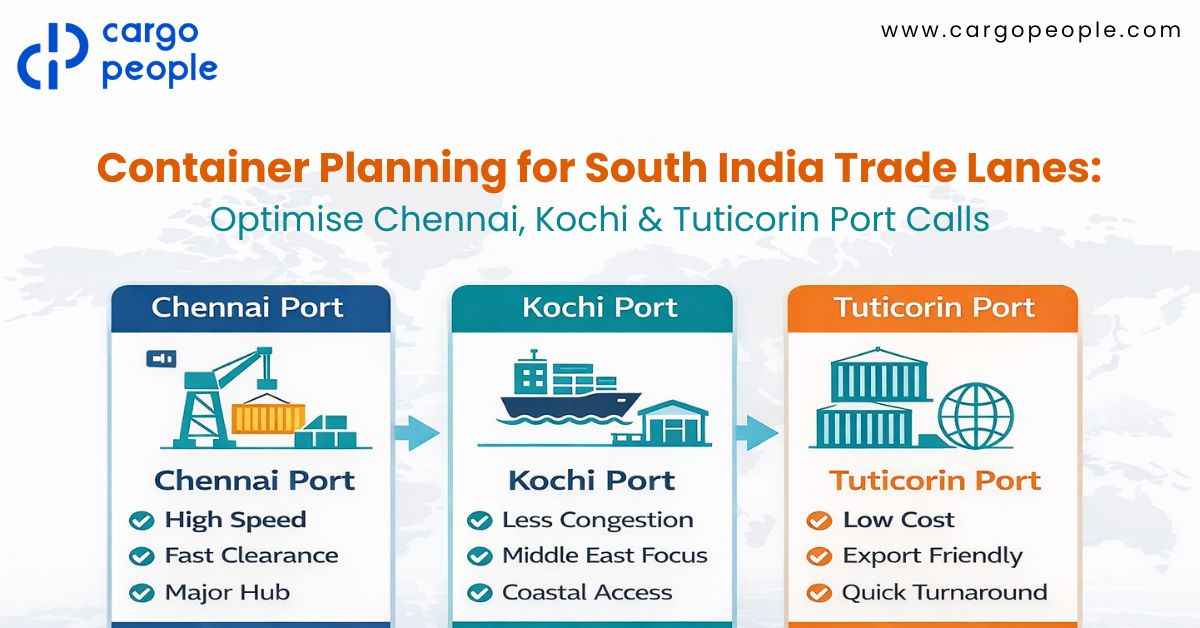
Container planning for South India trade lanes typically takes 3 to 7 days from booking to vessel loading, depending on port congestion, documentation accuracy, and inland transport coordination.
In most cases, businesses must align:
- Vessel schedules and cut-off times
- Container availability (especially during peak export months)
- Customs documentation and filing timelines
- Inland trucking from factory to port
A delay of even 24 hours can lead to demurrage costs between ₹7,000 and ₹15,000 per container per day, along with missed sailings and delivery penalties.
Real Business Scenario: Where Container Planning Breaks Down
In early 2025, a mid-sized auto component exporter from Hosur planned shipments through Chennai Port for a European buyer. The cargo reached the port just 10 hours after the vessel cut-off time.
The shipment was rolled over to the next vessel, causing:
- 3 days additional port storage
- Nearly ₹38,000 in demurrage charges
- Contractual penalty from the buyer due to late delivery
The exporter had cargo ready, documentation prepared, and space booked. The only gap was lack of synchronization between factory dispatch, transporter timing, and port cut-off schedules.
This is where structured container planning becomes critical.
Container Planning for South India Trade Lanes: What It Really Involves
Container planning for South India trade lanes is not just about booking space on a vessel. It is a multi-layer operational process involving timing, coordination, and compliance across multiple stakeholders.
For every shipment, four key elements must align:
- Port selection based on cargo type and route
- Vessel schedule and weekly sailing frequency
- Container availability at ICD or port yard
- Inland transportation timing
If even one of these elements is misaligned, it can result in:
- Missed vessel cut-offs
- Additional storage charges
- Increased transit time by 3–5 days
In practice, well-planned shipments reduce logistics costs by 15–25% compared to unplanned movements.
Chennai, Kochi & Tuticorin: Operational Differences That Impact Planning
Chennai Port: High Volume but High Pressure
Chennai Port is one of the busiest container gateways in South India, handling 1.5 to 2 million TEUs annually.
Because of its high volume, exporters often face:
- Average dwell time of 3 to 5 days
- Peak season congestion increasing dwell time up to 6–7 days
- Limited buffer for late gate-in
However, Chennai offers strong advantages:
- Direct connectivity to Europe, USA, and Southeast Asia
- High vessel frequency (3–5 sailings per week per route)
- Strong rail and road connectivity
This makes Chennai ideal for high-volume exporters who can manage strict timelines.
Kochi Port: Efficient but Route-Specific
Kochi operates with comparatively lower congestion and handles over 600,000 TEUs annually.
Typical operational characteristics include:
- Dwell time between 2 to 4 days
- Faster customs clearance due to lower inspection pressure
- Strong presence of feeder vessels
Kochi works best for:
- Reefer cargo (food, pharmaceuticals)
- Shipments to Middle East and Europe
- Businesses prioritizing stability over frequency
However, limited direct vessel options can sometimes increase transit time by 1–3 days.
Tuticorin Port: Cost-Efficient and Less Congested
Tuticorin has emerged as a preferred port for exporters due to its efficiency. It handles approximately 800,000 TEUs annually.
Operational advantages include:
- Lower dwell time of 2 to 3 days
- Reduced congestion even during peak months
- Faster gate-in to vessel turnaround
Many exporters report:
- 20–30% lower demurrage risk compared to Chennai
- More predictable shipment schedules
Tuticorin is especially effective for:
- Textile exporters
- Bulk shipments
- Cost-sensitive businesses
Step-by-Step Container Planning Process (Operational View)
A typical container movement follows a structured process, and each step has a time sensitivity attached to it.
Container Planning Workflow
- Booking confirmation with shipping line (24–48 hours)
- Container allocation and pickup planning (1–2 days)
- Cargo stuffing at factory or warehouse (1 day)
- Inland transport to port (1–3 days depending on distance)
- Gate-in before port cut-off (strict deadline)
- Documentation filing and customs clearance (24–72 hours)
- Vessel loading as per schedule
Key Timing Risk
The most critical stage is gate-in timing. Missing it by even a few hours can result in:
- Shipment rollover
- Additional 3–5 days delay
- Increased logistics cost by 10–20%
Logistics Cost Breakdown: Where Businesses Lose Money
Most businesses underestimate the impact of poor planning on logistics cost.
Major Cost Components
- Ocean freight (40–60% of total cost)
- Terminal Handling Charges (₹8,000–₹18,000 per container)
- CHA and documentation fees (₹3,000–₹7,000)
- Inland transport (₹15,000–₹60,000 depending on distance)
- Port storage and handling
Hidden Cost Drivers
- Demurrage: ₹7,000–₹15,000 per day
- Detention: ₹5,000–₹12,000 per day
- Rollover charges due to missed vessel
In real scenarios, poor planning can increase shipment cost by ₹25,000 to ₹60,000 per container.
Documentation Accuracy: The Most Underrated Factor
In many cases, delays are not caused by ports or shipping lines, but by documentation errors.
Even a small mismatch in invoice value or HS code can trigger:
- Customs inspection
- Cargo hold for 2 to 5 days
- Additional storage costs
Critical Documents Required
- Commercial Invoice
- Packing List
- Shipping Bill
- Bill of Lading
- IEC details
Accurate documentation can reduce inspection probability to below 10%, significantly improving clearance speed.
Logistics Risks & Delay Factors in South India Trade Lanes
Every trade lane has predictable risks. South India ports are no exception.
Common Delay Factors
- Missing vessel cut-off by a few hours
- Truck delays due to highway congestion
- Incorrect HS code or valuation
- Container shortage during peak export season
- Port congestion (especially Chennai)
- Customs inspection (10–20% of shipments)
High Impact Risks
- Shipment rollover adds 3–7 days delay
- Demurrage accumulation within 48 hours
- Delivery commitments missed, affecting buyer trust
Practical Business Scenario: Port Optimization Strategy
A Coimbatore-based textile exporter was consistently facing delays through Chennai Port.
After shifting operations to Tuticorin:
- Dwell time reduced from 5 days to 2.5 days
- Logistics cost reduced by ₹30,000 per container
- On-time delivery improved from 70% to 92%
This was achieved purely through better port selection and planning alignment.
Decision Guide: How to Choose the Right Port
Choose Chennai Port If
- You need maximum shipping line options
- You ship large volumes regularly
- You have strong CHA and planning support
Choose Kochi Port If
- Your cargo is perishable or sensitive
- You are exporting to Middle East or Europe
- You prefer stable operations over frequency
Choose Tuticorin Port If
- You want lower cost and faster turnaround
- You are exporting textiles or bulk cargo
- You want minimal congestion risk
Role of Freight Forwarders in Container Planning
A professional freight forwarder plays a central role in reducing inefficiencies.
They help businesses by:
- Planning shipments based on vessel schedules
- Ensuring container availability during peak demand
- Coordinating CHA, transporter, and port operations
- Managing documentation and compliance
- Providing real-time tracking and updates
Businesses working with experienced forwarders report:
- 30–40% reduction in delays
- Better cost control
- Improved shipment predictability
Container Planning for South India Trade Lanes: Key Takeaways
Container planning for South India trade lanes requires a structured and coordinated approach.
Without proper planning, businesses face:
- Increased costs due to demurrage and detention
- Shipment delays of 3–7 days
- Operational inefficiencies
With proper planning, businesses achieve:
- Faster cargo movement
- Reduced logistics cost by up to 25%
- Higher reliability in global trade operations
Conclusion
Optimising container planning across Chennai, Kochi, and Tuticorin ports is not about choosing the nearest port. It is about choosing the most efficient logistics route based on cargo, timelines, and cost sensitivity.
Businesses that focus on:
- Accurate documentation
- Vessel schedule alignment
- Port-specific strategy
- Freight forwarder coordination
are able to significantly improve both cost efficiency and delivery performance.
CTA — Cargo People Logistics
📞 +91 97174 65454
📧 wecare@cargopeople.com
Get a Shipping Quote from Cargo People Logistics