

 USA
USA
 United Kingdom
 Germany
 Argentina
 Australia
 Canada
 New Zealand
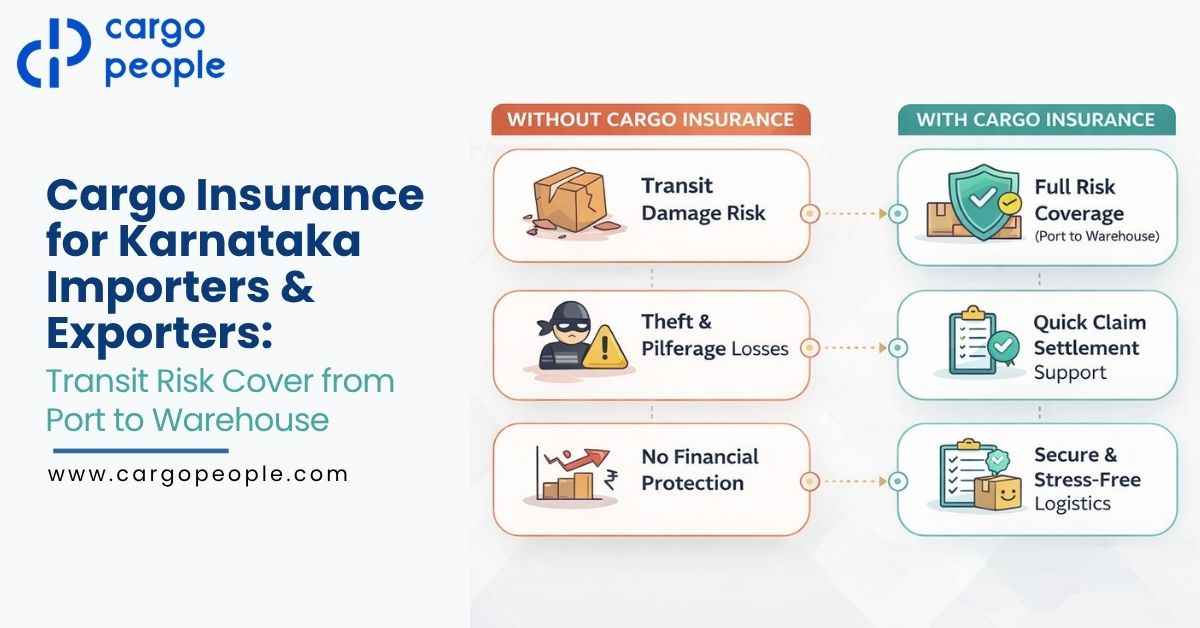
In early 2026, a Bengaluru-based electronics importer routed a shipment through Chennai Port. Due to congestion and delayed unloading, the container remained at the terminal for 4 days beyond the free period. During this time, exposure to humidity caused internal damage to sensitive electronic components.
The financial impact included:
- Cargo damage valued at ₹14.5 lakh
- Demurrage charges of ₹36,000
- Additional inland transport delay of 2 days
The importer assumed carrier liability would cover losses. However, international shipping liability frameworks compensate only 5–10% of cargo value, leaving a major portion unrecovered.
This situation is not uncommon. Karnataka-based businesses depend heavily on ports like Chennai and Mangalore, where cargo handling volumes and climatic conditions significantly increase exposure to transit risks.
Cargo insurance, in such scenarios, acts as a financial buffer that ensures business continuity.
Cargo Insurance Karnataka: Understanding Real Transit Exposure Across the Supply Chain
Cargo movement is not a single-point activity. A typical international shipment passing through Karnataka logistics routes involves 10–15 handling stages, each introducing a new layer of risk.
From unloading at Chennai Port to road transportation covering 300–350 km to Bengaluru, cargo is exposed to multiple operational variables.
Key exposure points include:
- Port handling operations with crane and yard movement
- Customs clearance delays increasing dwell time
- Container storage under open yard conditions
- Long-haul trucking across highways
- Last-mile unloading at warehouses
Each stage contributes to cumulative risk. Industry estimates suggest that handling-related damage alone accounts for 3–5% of total cargo issues, while inland transportation adds another 7–10% risk probability.
Cargo insurance in Karnataka is designed to cover this entire chain rather than just international movement.
Cargo Insurance Karnataka Coverage Types Explained in Practical Terms
All Risk Cargo Insurance: Full Coverage for Modern Trade
All risk policies are widely used by importers and exporters handling high-value or sensitive cargo. This type of coverage protects against most physical loss or damage scenarios during transit.
In real logistics operations, this includes:
- Damage during loading and unloading
- Accidental impact during transportation
- Weather-related exposure such as rain or humidity
- Theft during transit or storage
For most businesses, this covers approximately 90–95% of real-world logistics risks, making it the most recommended option.
Total Loss Insurance: Limited but Cost-Sensitive Option
Total loss policies are generally used when businesses aim to reduce insurance costs. However, coverage is restricted to extreme scenarios such as:
- Vessel sinking
- Complete cargo destruction
- Major accidents
This type of insurance does not cover partial damage, which accounts for over 70% of logistics-related claims, making it less practical for most commercial shipments.
Warehouse-to-Warehouse Coverage: End-to-End Protection
For Karnataka importers and exporters, this is one of the most relevant policies. It ensures coverage from the supplier’s location to the final delivery warehouse.
Considering that inland transport from Chennai to Bengaluru takes 2–5 days, and involves multiple checkpoints and handling stages, this policy ensures continuous protection.
Cargo Insurance Karnataka: Step-by-Step Logistics Process with Risk Integration
Understanding where insurance fits into logistics operations helps businesses make better decisions.
Operational Workflow
1 Cargo booking with freight forwarder
2 Cargo value declaration based on invoice
3 Insurance policy issuance before shipment dispatch
4 Cargo movement via sea or air freight
5 Customs clearance at port or airport (24–72 hours typical timeline)
6 Inland transport to Karnataka (2–5 days depending on distance)
7 Final delivery and unloading
Insurance becomes active before dispatch and remains valid until delivery, covering every stage of the process.
Table 1 — Logistics Process Overview with Risk and Timelines
| Process Stage | Authority | Typical Timeline | Documents Required | Risk if Delayed |
|---|---|---|---|---|
| Cargo Dispatch | Exporter | 1–3 days | Invoice, Packing List | Incorrect valuation |
| Port Handling | Port Authority | 1–2 days | Bill of Lading | Damage, exposure |
| Customs Clearance | CBIC | 24–72 hours | Bill of Entry | Storage charges |
| Inland Transport | Transporter | 2–5 days | Delivery Order | Theft, accident |
| Final Delivery | Importer | Same day | POD | Damage detection delay |
Even a delay of 2–3 days can lead to:
- Demurrage: ₹7,000–₹15,000 per day
- Detention: ₹3,000–₹8,000 per day
- Additional warehousing charges
Cargo Insurance Karnataka: Cost Structure and Financial Impact
Cargo insurance is one of the lowest-cost components in the logistics chain but provides one of the highest financial protections.
Typical Cost Range
Insurance premiums generally range between 0.1% to 0.5% of cargo value.
For example:
- Cargo value: ₹25 lakh
- Insurance cost: ₹2,500 to ₹12,500
When compared to potential losses, which can exceed ₹10 lakh even for partial damage, the cost-benefit ratio is significantly favorable.
Factors Affecting Premium
- Type of cargo (fragile goods attract higher premium)
- Transit route and distance
- Packaging standards
- Past claim history
Table 2 — Documentation Checklist for Cargo Insurance Claims
| Document | Issued By | Required For | Submission Stage | Risk if Missing |
|---|---|---|---|---|
| Commercial Invoice | Exporter | Cargo value | Policy stage | Underinsurance |
| Packing List | Exporter | Cargo details | Claim stage | Claim rejection |
| Bill of Lading / AWB | Carrier | Shipment proof | Transit | Policy invalid |
| Insurance Policy | Insurer | Coverage proof | Before dispatch | No coverage |
| Survey Report | Surveyor | Damage verification | Claim stage | Settlement delay |
Accurate documentation increases claim approval rates from approximately 60% to above 90%.
Cargo Insurance Karnataka: Major Risk Factors Businesses Often Underestimate
Port and Terminal Risks
Ports like Chennai handle millions of tonnes annually. High cargo volumes increase the probability of delays and handling errors. Even a small handling issue can lead to damage costing ₹50,000 to ₹5 lakh per incident.
Inland Transport Exposure
Road transport contributes significantly to cargo risk. Data suggests that 8–10% of logistics claims in India are linked to road transport incidents, including accidents and theft.
Weather and Environmental Conditions
Coastal routes and monsoon conditions impact cargo significantly. Moisture damage alone accounts for 15–20% of cargo damage cases during monsoon months.
Theft and Pilferage Risk
High-value goods such as electronics, pharmaceuticals, and branded products are particularly vulnerable. Losses can range from ₹1 lakh to ₹25 lakh depending on shipment size.
Practical Scenario: Financial Impact of Insurance vs No Insurance
A Karnataka-based exporter shipped garments worth ₹10 lakh.
During transit:
- Container water leakage damaged 25% cargo
Without insurance:
- Loss: ₹2.5 lakh
With insurance:
- Claim settled: ₹2.2 lakh
- Loss reduced by nearly 88%
This highlights the financial importance of cargo insurance in real trade operations.
When Should Businesses in Karnataka Opt for Cargo Insurance
Cargo insurance becomes essential under the following conditions:
- Shipment value exceeds ₹5 lakh
- Goods are fragile or sensitive
- Shipment involves multiple transport modes
- Transit route includes ports and long inland movement
- Export contracts require CIF terms
Role of Freight Forwarders in Cargo Insurance Management
Freight forwarders act as operational advisors in insurance planning. Their role includes:
- Advising appropriate coverage type
- Ensuring accurate cargo valuation
- Coordinating policy issuance before dispatch
- Managing claim documentation
- Following up with insurers for settlement
Businesses working with experienced freight forwarders see up to 60–70% faster claim resolution timelines.
Cargo Insurance Karnataka: Key Operational Takeaways
Cargo insurance should be treated as a standard logistics practice rather than an optional expense.
Important points to consider:
- Around 1 in every 10 shipments faces transit risk
- Insurance cost is minimal compared to loss exposure
- Documentation accuracy directly impacts claim success
- Inland transport in Karnataka adds significant risk layer
Conclusion: Cargo Insurance Karnataka as a Strategic Business Decision
Cargo insurance in Karnataka plays a crucial role in protecting businesses from financial uncertainty in global trade. With increasing cargo volumes, complex supply chains, and multiple handling points, the risk exposure continues to rise.
Businesses that avoid insurance often face:
- High financial losses
- Operational disruptions
- Delayed customer commitments
On the other hand, insured shipments ensure better risk management, financial stability, and smoother logistics operations.
For importers and exporters in Karnataka, cargo insurance is not just protection—it is a strategic necessity for sustainable trade operations.
CTA — Cargo People
📞 +91 97174 65454
📧 wecare@cargopeople.com
Get a Shipping Quote from Cargo People Logistics